
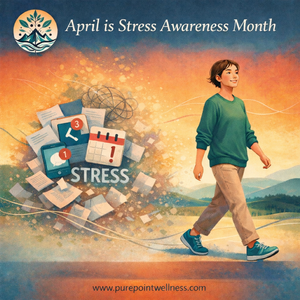
April is Stress Awareness Month—and if stress feels more common than ever, you're not imagining it.
Between work demands, financial pressures, family responsibilities, constant notifications, and a 24-hour news cycle, many people are living in a low-grade fight-or-flight state without even realizing it.
Stress isn’t just a mental experience. It’s a full-body event.
And when it lingers, it changes how your body functions.
The Most Common Stressors People Talk About
Online research and national surveys consistently show the same core stress triggers:
1. Work & Career Pressure: Deadlines, performance expectations, job insecurity, and blurred boundaries between home and work are major contributors. Burnout is now recognized by the World Health Organization as a legitimate workplace phenomenon.
2. Financial Concerns: Inflation, debt, housing costs, and long-term financial uncertainty rank among the top stressors for adults in the U.S.
3. Constant Digital Input: Phones, email, social media, and breaking news keep the nervous system stimulated. The brain rarely gets a true pause.
4. Health & Family Responsibilities: Caregiving, parenting, supporting aging parents, and navigating personal health concerns all add emotional load.
5. Unprocessed Emotional Stress: Past trauma, grief, relationship strain, or chronic worry can quietly keep the body in a protective state—even if life appears stable on the outside.
When stress becomes chronic, the body produces sustained levels of cortisol and adrenaline. Over time, this can contribute to:
- Sleep disruption
- Digestive issues
- Muscle tension and headaches
- Increased anxiety
- Irritability or emotional overwhelm
- Weakened immune response
The body is designed for short bursts of stress—not ongoing activation.
How to Reduce Stress: What Actually Works
Many people search for quick stress relief. While there is no single magic solution, there are evidence-informed strategies that support regulation.
1. Breathwork: Slow breathing (4–5 seconds in, 5–6 seconds out) signals safety to the nervous system and activates the parasympathetic response.
2. Movement: Even a 10–15 minute walk reduces circulating stress hormones and improves mood.
3. Limiting Input: Reducing news consumption and digital notifications decreases nervous system overstimulation.
4. Consistent Sleep Routines: Regular sleep and wake times help regulate cortisol patterns.
5. Connection: Talking through stress with someone safe lowers perceived threat levels in the brain.
6. Body-Based Therapies: This is where many people find a deeper shift.
When stress lives in the body, physical therapies that directly influence the nervous system can be especially powerful.
How AcuDetox Supports the Nervous System
AcuDetox is a specialized 5-point ear acupuncture protocol originally developed to support individuals in high stress and recovery settings. Today, it is widely used to calm the nervous system and support emotional balance.
Rather than “talking through” stress, AcuDetox works directly with the body.
What Happens During a Session?
Small, sterile needles are placed at five specific points on the ear that correspond with the nervous system and stress regulation pathways.
These points are associated with:
- Calming fight-or-flight activation
- Reducing stress hormones
- Improving sleep
- Supporting emotional processing
- Enhancing overall resilience
Many people describe the experience as:
- A wave of calm
- Feeling grounded or centered
- Emotional release
- Deep relaxation
- Improved sleep that night
Sessions typically last 30–45 minutes and are done in a quiet, supportive setting.
Why AcuDetox Works for Chronic Stress
Chronic stress is not just a thought pattern—it is a physiological pattern.
The nervous system can become “stuck” in a heightened state of alert. AcuDetox helps interrupt that loop by signaling safety to the brain through auricular (ear) nerve pathways.
Research and decades of use in behavioral health programs show that this protocol can:
- Lower perceived stress
- Improve sleep quality
- Reduce anxiety symptoms
- Support long-term emotional regulation
Unlike medications, AcuDetox is drug-free and works with the body’s natural regulation systems.
Consistency builds resilience.
Many clients come weekly, bi-weekly, or monthly depending on their stress levels and goals.
Stress Relief Is Not Selfish
Stress Awareness Month is not just about identifying stress—it’s about recognizing that your body deserves support.
Self-care doesn’t have to be complicated. It can look like:
- Ten minutes of intentional breathing
- A short walk outside
- Turning off notifications for an evening
- Scheduling a session designed to help your body reset
You don’t have to wait until burnout to support your nervous system.