
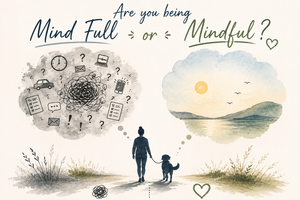
When was the last time something made you stop in your tracks?
Maybe it was a sunset that painted the sky in colors you couldn’t quite describe. The smell of Colorado rain after a hot summer day. A piece of music that gave you goosebumps.
That feeling has a name: awe.
When many of us hear the word awe, we think of extraordinary experiences such as the Grand Canyon, powerful ocean waves, or witnessing the Northern Lights. While those moments certainly inspire awe, they aren’t the only places where it can be found.
Psychologists define awe as the feeling we experience when something vast, beautiful, or deeply meaningful shifts our perspective…even for a moment. Awe reminds us that there is something larger than ourselves and invites us to pause long enough to truly take it in.
The wonderful thing is that those moments don’t have to be grand. They can be found in the ordinary moments we often rush past, if we’re willing to slow down enough to notice.
While awe may seem like a simple emotion, science is revealing that it has remarkable effects on both the brain and body. Studies suggest that moments of awe can:
Calm the nervous system
Lower stress levels
Increase feelings of connection and gratitude
Improve mood and overall well-being
Help us become more present in the moment
Perhaps the most beautiful aspect of awe is that it doesn’t require a passport, a bucket-list adventure, or even leaving your neighborhood. It can be found in the ordinary moments we often rush past, if we’re willing to slow down enough to notice.
This month, I invite you to look for one moment of everyday awe.
It may be the warmth of the morning sun on your face, the scent of fresh rain, a hummingbird outside your window, or the laughter of someone you love. These moments may seem small, but they have an extraordinary way of reminding us to slow down, breathe deeply, and reconnect with what matters most.
Sometimes the greatest gifts aren’t found by searching for something more, they’re found by noticing what has been there all along.